Sound Therapy

Click the paragraphs below to view more detail about the approaches.
Safe and Sound Protocol (SSP)

Safe The Safe and Sound Protocol (SSP) is an evidenced based listening therapy developed by Dr. Stephan Porges that is based on Polyvagal Theory. It is designed to improve nervous system regulation, sensory sensitivities, auditory processing, behavioral state regulation (ie. attention, impulses, support inhibition of undesired responses, etc.) and social engagement behaviours (ie. communication, intimacy, play, etc.). The primary population that it targets is people with trauma and other diagnoses with autonomic dysregulation at the core (anxiety, depression, bipolar disorder, ADHD, ASD, PTSD, etc.). The SSP helps the nervous system to shift out of chronic states of hyper-vigilance and arousal (ie. anxiousness, aggression, agitation, etc.) and/or hypo-arousal (shut down, low mood, dissociation, etc.).
How Does it Work?
The SSP is non-invasive and involves listening to the filtered music within the frequency range of a melodic human voice. The SSP works through acoustic vagal nerve stimulation, which creates new neural pathways that shift the nervous system out of a state of defense and into a state of social engagement and a greater sense of feeling safe. The way a person perceives frequencies in their environment can be augmented due to trauma, anxiety, or neurodevelopmental conditions. Individuals with these conditions can receive chronic signals of threat in their environment as they are more sensitive to lower frequencies (associated with primal dangers – ie growl of a predator or an earthquake) and/or higher frequencies (associated with the human voice or emergency signals – ie. sirens or screams). The SSP works by enhancing and processing human speech and dampening the interference of lower frequency background sounds. This helps the client to receive appropriate cues of safety from their environment, which allows them to more adaptably communicate and connect with the people around them and experience a greater sense of safety. For further explanation, visit the Unyte website or request consult through my contact page.
Reported Benefits
- Social behaviors like affection, connecting with others, facial expressivity and vocal prosody
- Improvement in emotional regulation
- Reduction in psychological symptoms, anxiety, depression, disassociation, fears and phobias
- Attention, problem solving, abstraction, sequencing, organization and planning, and memory
- Less impulsivity and hyperactivity
- Better sleep, body awareness, and gastrointestinal function
- Less fatigue and pain
- Sensory processing
Traditional Sound Healing
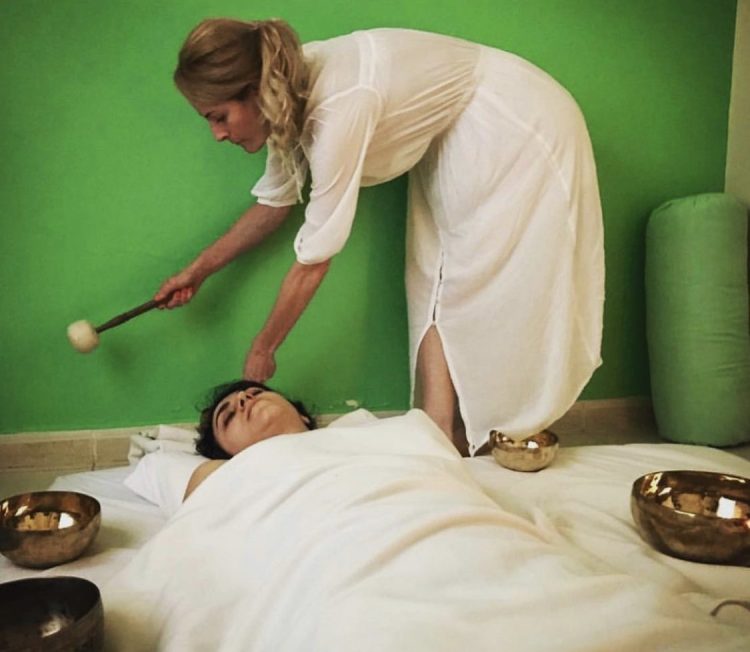
Dating back to ancient Greece, Egypt and Himalayan cultures, sound healing has been used to promote emotional, physical, mental, and spiritual well-being. In my own practice, I utilize a variety of different instruments from ancient wisdom traditions, which produce harmonic frequencies that interact with the body’s own vibratory field.
Modern research has shown that specific sound vibrations can have a positive impact on brainwave patterns through mirroring and shifting the brainwaves into states indicative of relaxation and wakeful focus. Repeated exposure to sound therapy can create a lasting shift in the brain activity and nervous system. Sound frequencies can also be used to enhance neuroplasticity (rewiring of the neural networks and nervous system to promote wanted change) through sensory stimulation and inducing a state of relaxation. Furthermore, sound therapy sessions influence the release of feel-good hormones, such as dopamine, oxytocin, and seratonin, while also decreasing stress hormones and increasing the number of immune-boosting cells. Sound therapy has shown to support various states of wellbeing, including reduction in pain, inflammation, depressive symptoms, stress, anxiety and fatigue, as well as improved mood, sleep, mental clarity, nervous system regulation, relationships, and connection to Self.
Pure Frequency Therapy
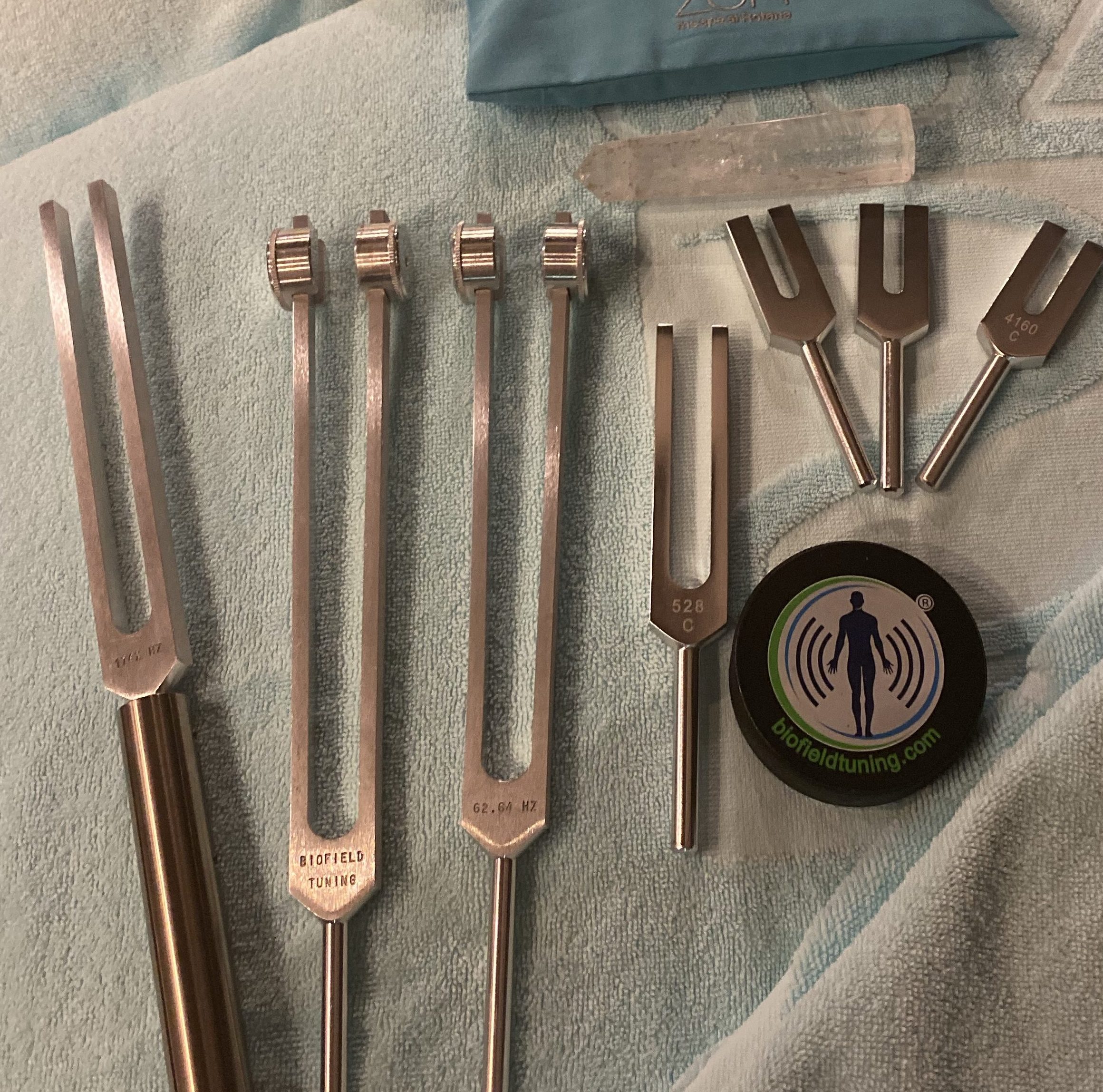
Pure frequency therapy uses specialized tuning forks around and directly on the body, which create a felt, soothing vibration, while also supporting the energetic alignment of the electromagnetic biofield. Resonant frequencies are used, such as the 7th and 8th harmonic of the Schumann frequency (frequency of alpha/theta brainwaves & the Earth’s atmosphere) to entrain with the human energy field, restoring its natural rhythms.
These pure frequency waves can also have an impact on the body’s molecular and cell structures, as well as the function of the body’s organs. Tuning forks with a custom contouring attachment are also used on the face, which stimulates circulation, decreases inflammation, releases tension, and promotes radiance from the inside-out. This type of treatment is said to support the clearing of the body’s energetic channels, known as meridians in Chinese medicine or Nadis in Yogic philosophy. These wisdom traditions believe having a balanced energy field promotes a state of homeostasis within the bodily systems and thus supports whole self healing and optimization (body, mind, emotions, spirit).

“Future medicine will be the medicine of frequencies.”
Albert Einstein
Read more about the evidence-based science behind sound therapy, and how it can be used to promote healing and support various aspects of wellbeing.

Additional complementary therapies and sensory inputs may be offered or requested in a session to support relaxation, present awareness, and the body’s own ability to heal.
Aromatherapy
Aromatherapy can be used to enrich any session, including counselling therapy, through contributing to physical, mental, and emotional well-being. Pure essential oils are used that are made from essences found in flowers, grasses, seeds fruits, leaves, resin, and trees.
Lavender, for example, can help relax people who feel anxious or stressed, while a eucalyptus blend can be used to uplift and/or clear congestion and brain fog. I have created custom blends for clients to use that are intended to help relax, ground, or awaken the client’s present state.


Reiki
Reiki is a type of energy therapy that involves working with a client’s universal (“rei”) life force energy (“ki”), and is said to promote a state of homeostasis within the body and brain that invokes the body’s innate capacity to heal itself.
A person may seek out this type of therapy if they are experiencing depleted or excessive energy in the body due to physical injury, stressors, illness, trauma and/or repressed emotions. During a reiki session, the client would have the choice of hands on healing, hands hovering above them, or a distance healing session that can be done from their own home. Reiki is used widely as a complimentary therapy within hospitals and private health care clinics, and has been linked to an array of positive outcomes. After one or more reiki sessions, a client may experience a greater state of relaxation, relief of pain, reduced symptoms of illness, elevated mood, and lower levels of stress and anxiety. In my own practice, reiki has also been helpful with trauma processing through awakening suppressed memories and emotions, while providing an energetic container of co-regulation, care, and for the emotions to be fully felt and witnessed.
Crystals & Gemstones
The application of crystals and gemstones can be used on or around the body during a therapy session, or a client may simply choose to hold a stone that they are drawn to.
Stones may also be used in counselling therapy to guide questioning and the exploration of the client’s lived experience. Each stone holds unique energies and properties that are said to support the healing process and to also balance the energy of the 4 bodies (physical, mental, emotional, and spiritual). Amethyst, for example, is believed to benefit the energy of the pineal gland or third eye. Using stones and crystals during a session may promote a greater sense of calm and focus.
Frequency Input
Playing sound frequency background music during a therapy session can be used to promote relaxation, focus, and nervous system regulation.
Binaural beats in the lower frequency range (14 to 30 Hz), for example, have been linked to increased concentration and alertness, problem-solving, and improved memory (1). Playing frequency music works in a similar way as sound therapy, where the frequencies played entrain with the brainwaves, slowing down the cycles, and as a results decreases arousal and supports the therapeutic process by allowing the client to tap into higher level brain functioning.

“If you just allow the body to rest, the healing will come by itself.”
Thich Naht Hann
 Counselling & Holistic Therapy